
Where Your Money Matters in the Kitchen - and Where it Doesn't
By Jason Moran, founder of Season
Buy better, cook better: where your kitchen budget should go
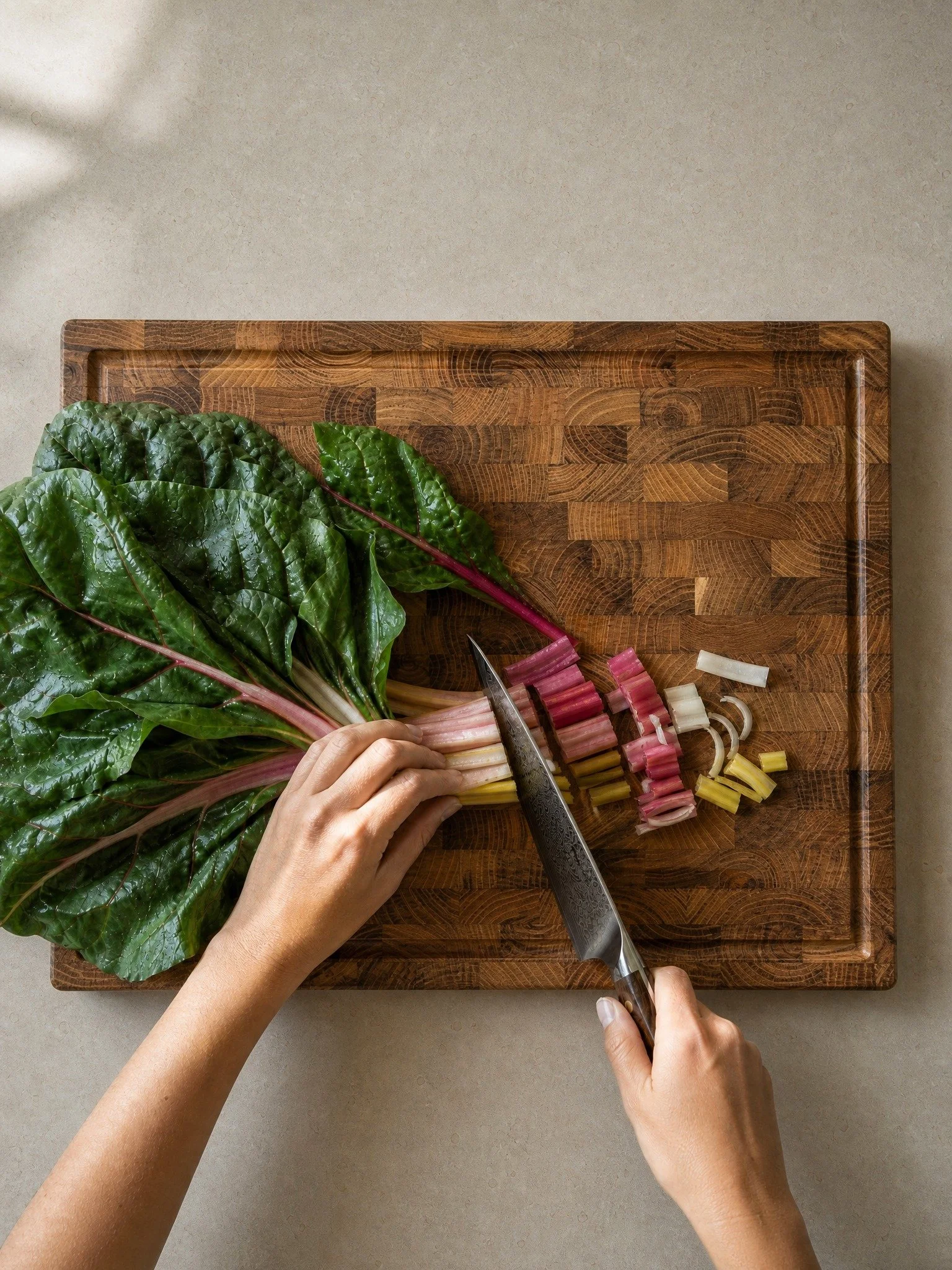
Chef's knife on end grain chopping board, both by Season
After fifteen years of selling cookware, I've watched a lot of people spend money in kitchens. Some of it brilliantly. A lot of it on things designed to be bought rather than used. The industry only ever tells you half the story - the half where the answer is "spend more". So here's both halves.
Where Your Money Matters
“Fifteen years in, the customers who spent £250 on three good things are still cooking with them.”
A chef's knife. One good one. Somewhere around £100 buys you steel that takes a proper edge and holds it, and a handle you can use for an hour without thinking about it. A sharp knife is safer than a blunt one - it goes where you tell it, instead of where the tomato decides. Almost everything you do in a kitchen goes through this one tool, which is why it's the last place to economise.
A wooden chopping board - specifically end grain. The most unglamorous advice I will ever give, and the best. An end grain board is made with the wood fibres standing upright, so the blade slips between them instead of cutting across them. Your knife stays sharp for weeks longer, and the board heals itself rather than collecting scars. It's not a board so much as knife insurance. Glass boards are the fastest way ever devised to ruin a knife, and I'd say that even if I sold them.
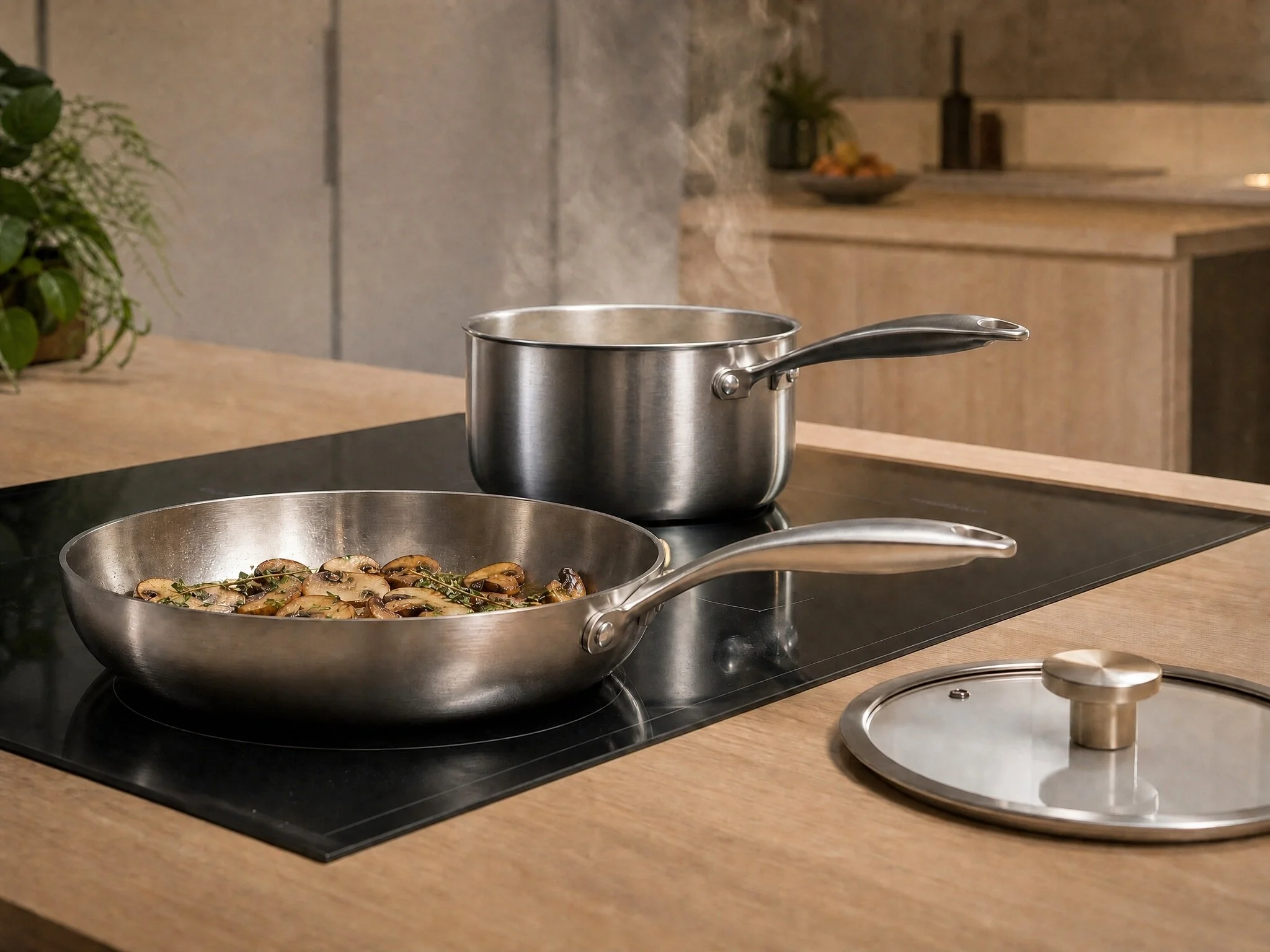
A steel frying pan. Everyone assumes they need non-stick. Then they learn to use a steel pan - get it properly hot, add the fat, stop fidgeting - and discover that most of the time they don't. A good tri-ply stainless pan browns better, goes in the oven, shrugs off metal utensils, and will literally last forever. Keep one good non-stick for eggs and fish if you like, but buy it once and treat it gently - every coating wears out in the end, whatever the marketing says. The best ones simply take years longer, and you'll enjoy the cooking more in the meantime.
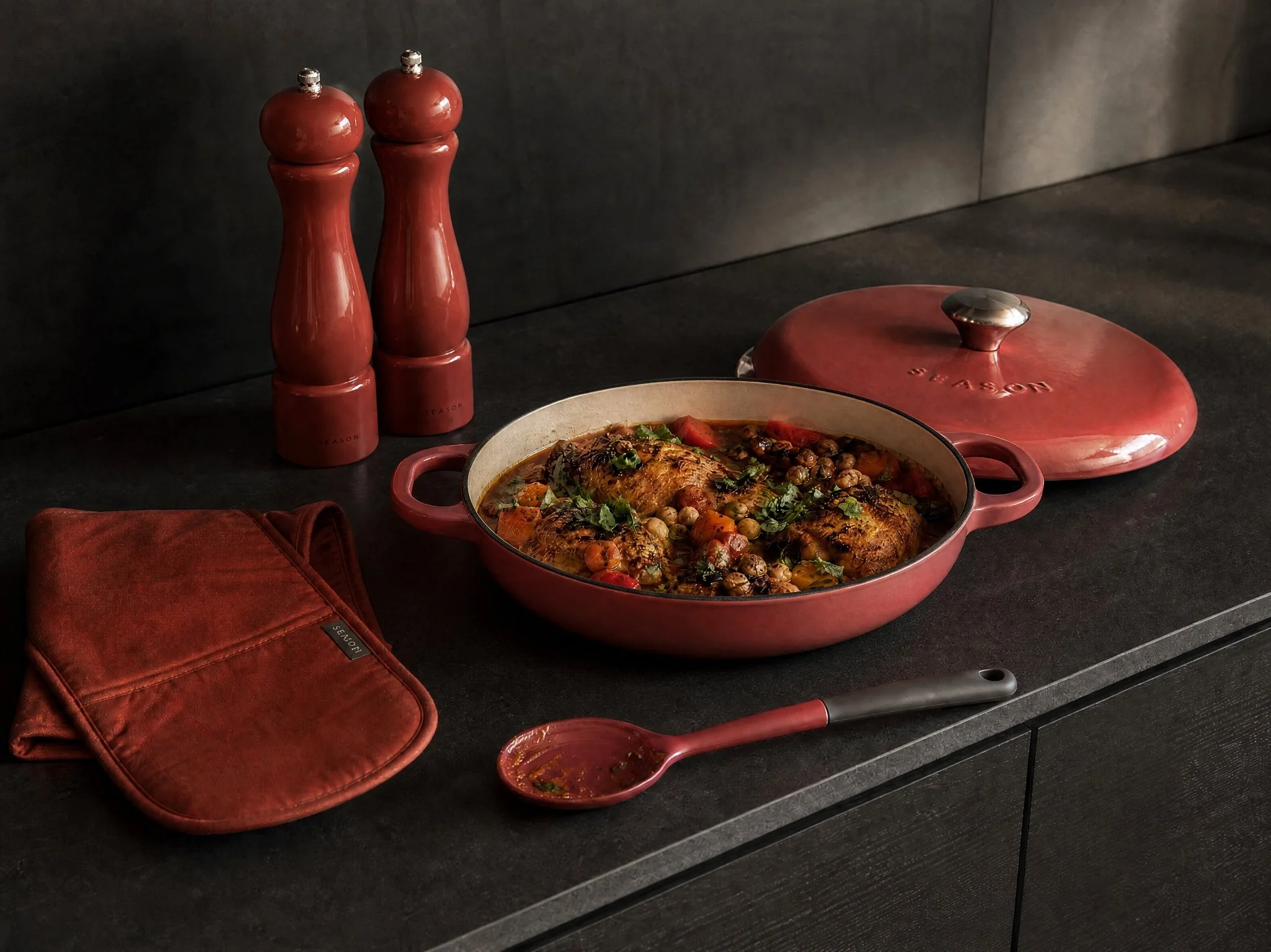
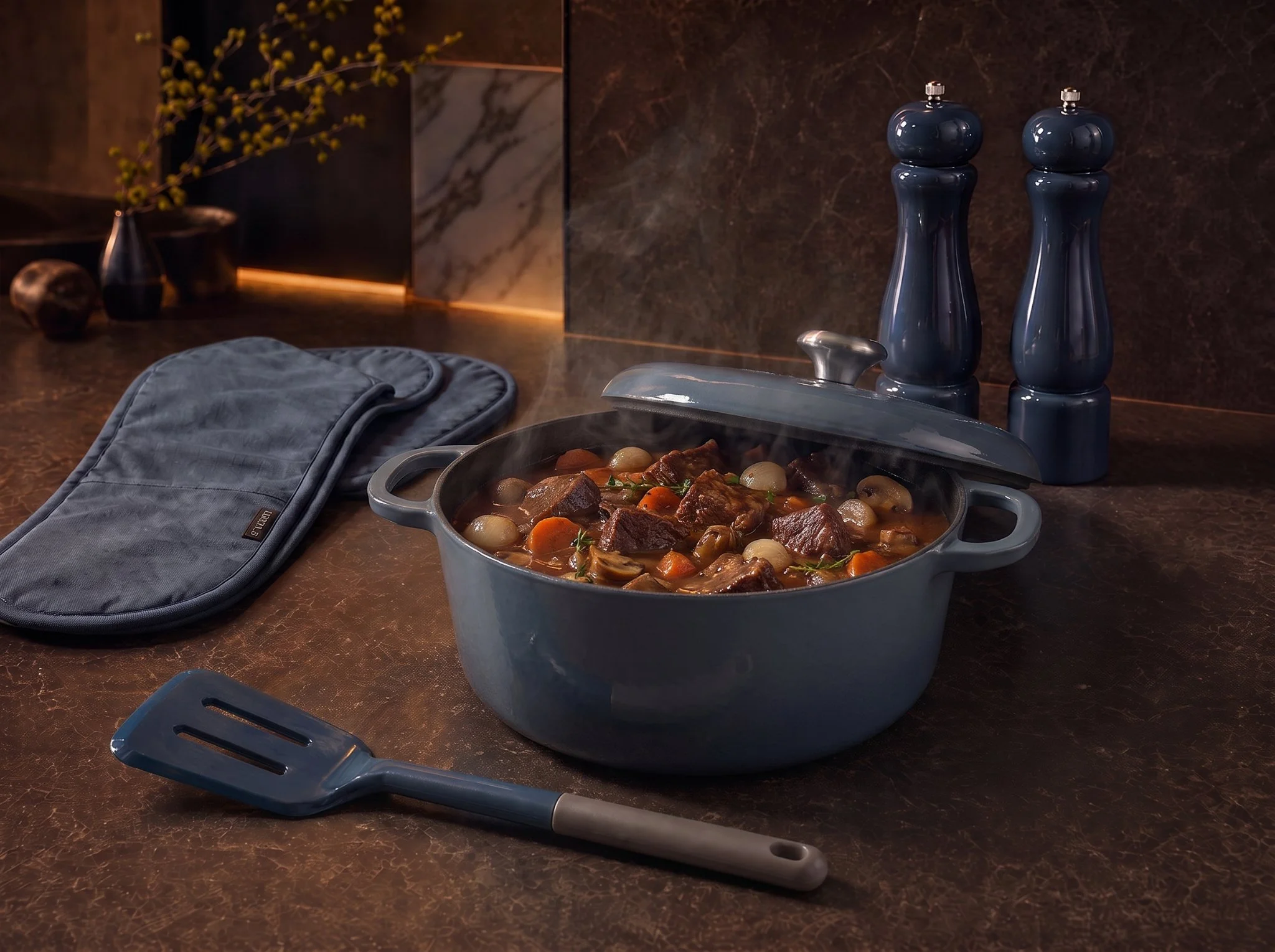
One heavy pot. Cast iron, enamelled, with a lid. Buy it at thirty and mention it in your will. It does bread, stews, curries, a chicken, and it does them better every year you own it. The obvious candidates are the famous French ones, which are perfectly good, and the million cheap copies, which are a bit uninspiring. Full disclosure: we sell an updated version for a fraction of the French price. You pays your money and you takes your choice!
Where it Doesn't
The cheap knife block. On a tight budget you have two choices. Buy one or two good knives that will do almost everything and last forever, building the collection as you actually need it. Or buy a cheap twelve-piece block you'll get bored of using because it's rubbish, throw it away, and start again with another one. The first path costs less over ten years and cooks better on every day of them. A good set is a different thing entirely - it's often the cheapest way to buy the best knives. It's the cheap block that's the trap.
Single-purpose gadgets - mostly. I say this as a man whose shop has sold strawberry hullers, so I know exactly how these things get bought. The test is whether it does a job your knife can't, often enough to earn its drawer space. A few pass. Most exist because they're cheap to make and easy to give as gifts, and neither of those is a reason to own one.
The new miracle material. The best cookware is mostly well-made things using common sense that has been around for hundreds of years, so beware anyone shouting loudly about a breakthrough. Two are particularly loud right now. Honeycomb non-stick pans have sold by the ton on the back of a famous chef's advertising, but the design was never patented, the market is flooded with copies, and the pattern is inherently flawed - you can't fry an egg on one without it sticking. And titanium, a word we've all been trained to hear as "that must be good", has no practical benefit in cookware at all. We know. We tested it.
Anything labelled "professional". The word gets thrown onto everything, so that you'll think: if this is what Michelin kitchens use, it will certainly do for me. Most of the time it means nothing, and it's frequently stuck on inferior kit fishing for a sales boost. But even when it's true, it's pointing the wrong way. A professional kitchen's first questions are not "will this cook better?" They are "is it cheap?" - because they're buying thirty of everything - and "will it survive the dishwasher a thousand times?" Your kitchen is not that kitchen. At home you can treat things with a little care, which is exactly why you can justify the gorgeous end grain board no restaurant could keep alive.
TLDR: The Short Version
Put your money where the tool touches the food every day - the knife, the board, the pan, the pot - and keep it in your pocket wherever the money is really buying the marketing. Fifteen years in, the customers who spent £250 on three good things are still cooking with them. The ones who spent it on twelve clever things have a drawer they can't close.
Visit Season for beautiful, high-quality cookware that gets the job done: https://seasoncookshop.co.uk/
Book yourself in for a Season cooking class: https://seasoncookshop.co.uk/pages/season-cooking-classes-london
Follow Season on Instagram: https://www.instagram.com/season_cookshop/
