An interview with Tom Davies, the Master of Bespoke Eyewear
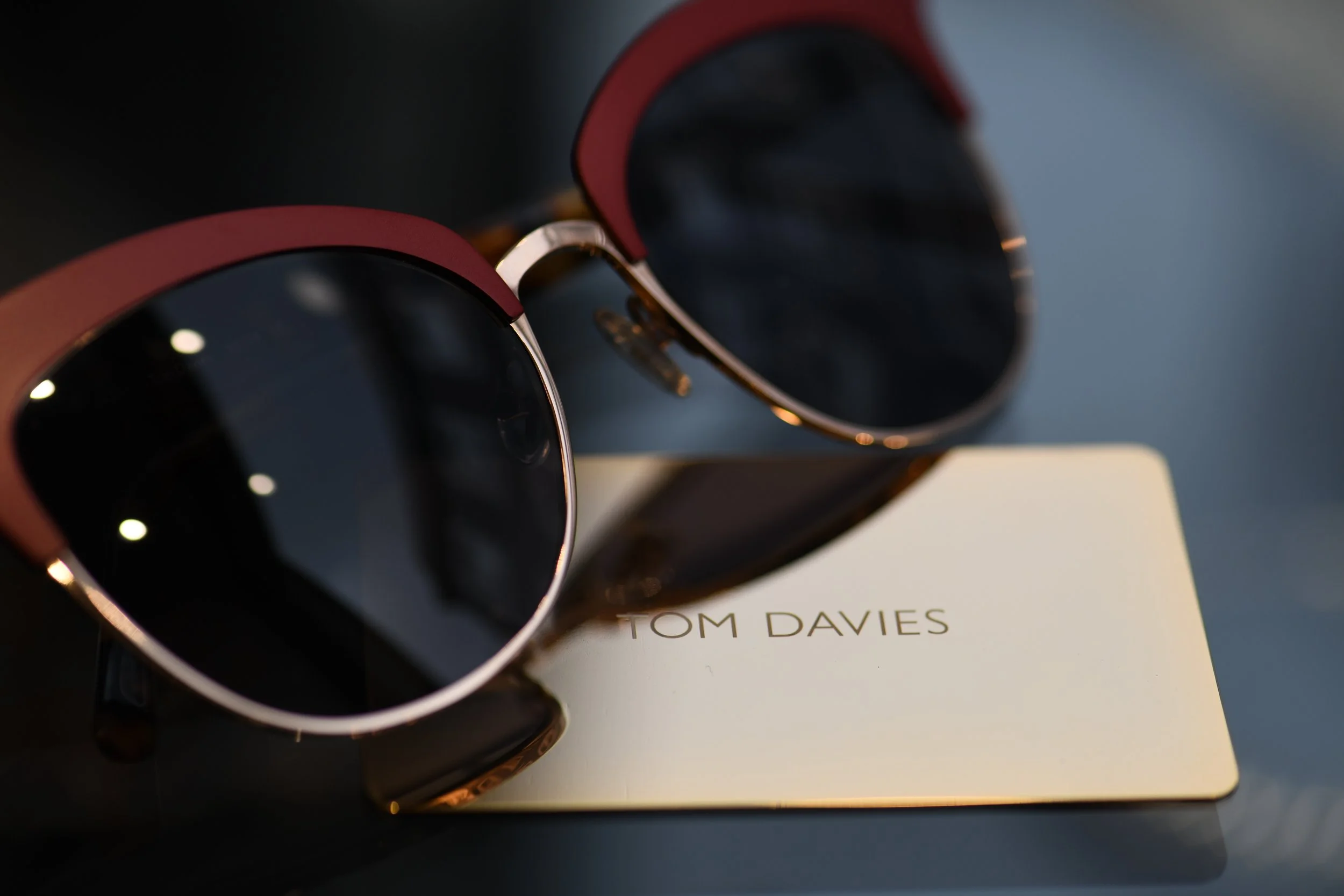
We sit down with Tom Davies, the master of bespoke eyewear trusted by celebrities worldwide, with a client list that includes Ed Sheeran, Emma Stone, Brad Pitt, Angelina Jolie, and Heston Blumenthal. Forget generic frames, his glasses are carefully measured and tailored to your face, taking into account everything from nose bridge height to temple length and lens curvature.
What is the biggest misconception people have about “bespoke” glasses?
Price. When they hear the word ‘bespoke’ they automatically exclude themselves. It’s like a force field going up. ‘That’s not me,’ they say. But of course it is. Thinking otherwise does them a disservice. We charge an extra £300 to have something tailormade for clients on top of a standard frame price. For something which will not only help them see but also enhance their features, not slip down their nose, is designed at the same time as their prescription and worn every day for at least two years. Far from being a luxury, it’s a necessity for anyone who wants their glasses to feel comfortable and look fantastic.
How do you balance aesthetics with comfort when designing frames?
They are two separate things but, of course, are linked together. You have to take the entire person into account. I always start with the prescription. That dictates so much in the final version of the frame. I want to manage the curve of the frame, to match the prescription and the optimal size of the lens against the client’s natural features. This can mean thinner lenses, less distortion and a lighter weight. I then like to tailor the shape of the frame to the client’s face – that is often the shape of the brow line but it can also be how their wear their hair, the length and shape of the nose and the type of jaw line. Usually all those things together. Finally, colour. Many others start here but I leave this until the end. Colour can have a physical as well as an emotional impact. It's no surprise people start with this when choosing glasses normally but we can make frames in any material or colour. So I make no compromises on the elements above and then choose colour at the end of the process.
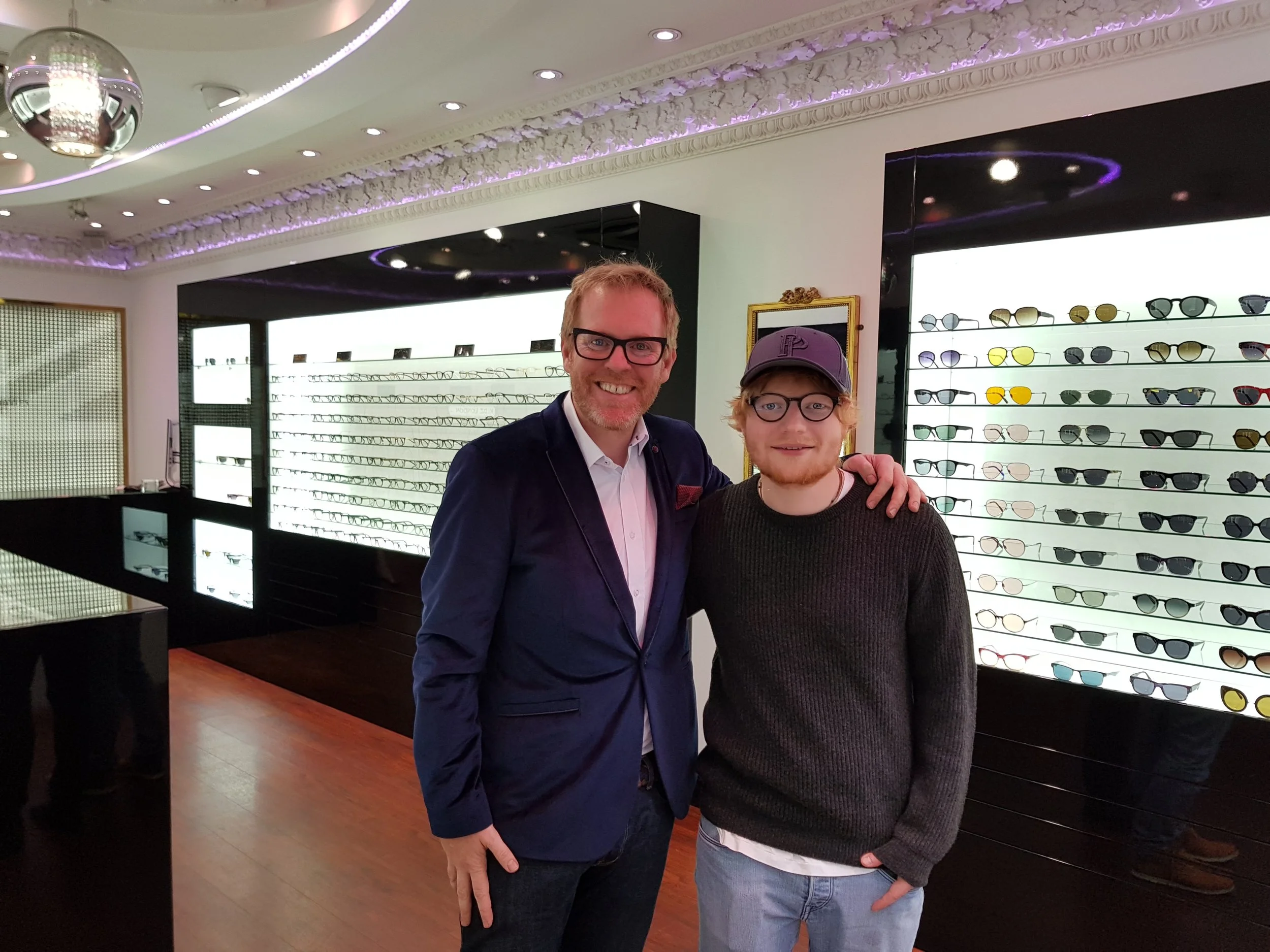
Tom Davies at his Sloane Square store with singer Ed Sheeran
How do you compete with large global eyewear brands while staying independent?
Service. I could leave it there but most of the time you are buying into a tribe. Eyewear is designed around standard measurements and you tend to buy into two things: 1. A look you like and 2. ‘It’ll do’. In most mainstream opticians, the decision to purchase is based on aggressive selling techniques – the idea is to get you in the store, make a sale and get you out. With Tom Davies, we don’t have to compromise so we can honestly tell someone what would work better and then back it up with evidence. This means making a new frame, often based on something they already like in store and reworking it for their prescription, face structure and other physical attributes such as the position of ears and cheeks. My success comes from consistently building my client base – and once they have had a frame tailormade for them, they never go back. The client can not only see the difference but feel it as well.
How do you see eyewear design evolving in the next 10 years?
There is going to be a huge burst of AI powered eyewear, dominated by the ‘tech bros’. In ten years, I expect about 30% of eyewear to be ‘smart’. Miniaturisation – integrating technology into frames – is still a limiting factor. While Ray-Ban did a good job of putting something half decent out last year, it's not caught on yet in the way smart watches have. But I think that is just a matter of time.
What trends in eyewear do you personally dislike but see everywhere?
None. I love glasses. I'm obsessed with looking at people in their glasses. I admire glasses which work well and tell complete strangers when I see it. Even when they’re not wearing mine! Though I’m never prouder when I see someone wearing a pair of my glasses – it’s happened a number of times in public and I always go up to the person and tell them who I am and how fantastic they look!
What is the most unusual request you have ever had from a client?
There have been many but the three that immediately come to mind are all pet related. One client asked me to put her beloved late dog’s ashes inside her glasses, which involved sprinkling them between two sheets of acetate, melting them together and cutting them into glasses. They looked pretty good.
Better were a pair of funky sunglasses made from the skin of another client’s pet snake! We laminated a shed skin into a clear acetate material and cut it into a Wayfarer shape.
Finally, I have to mention a pair of sunglasses I made for the late actress Carrie Fisher’s dog Gary. They looked cool but he didn’t wear them for long because they were also edible!
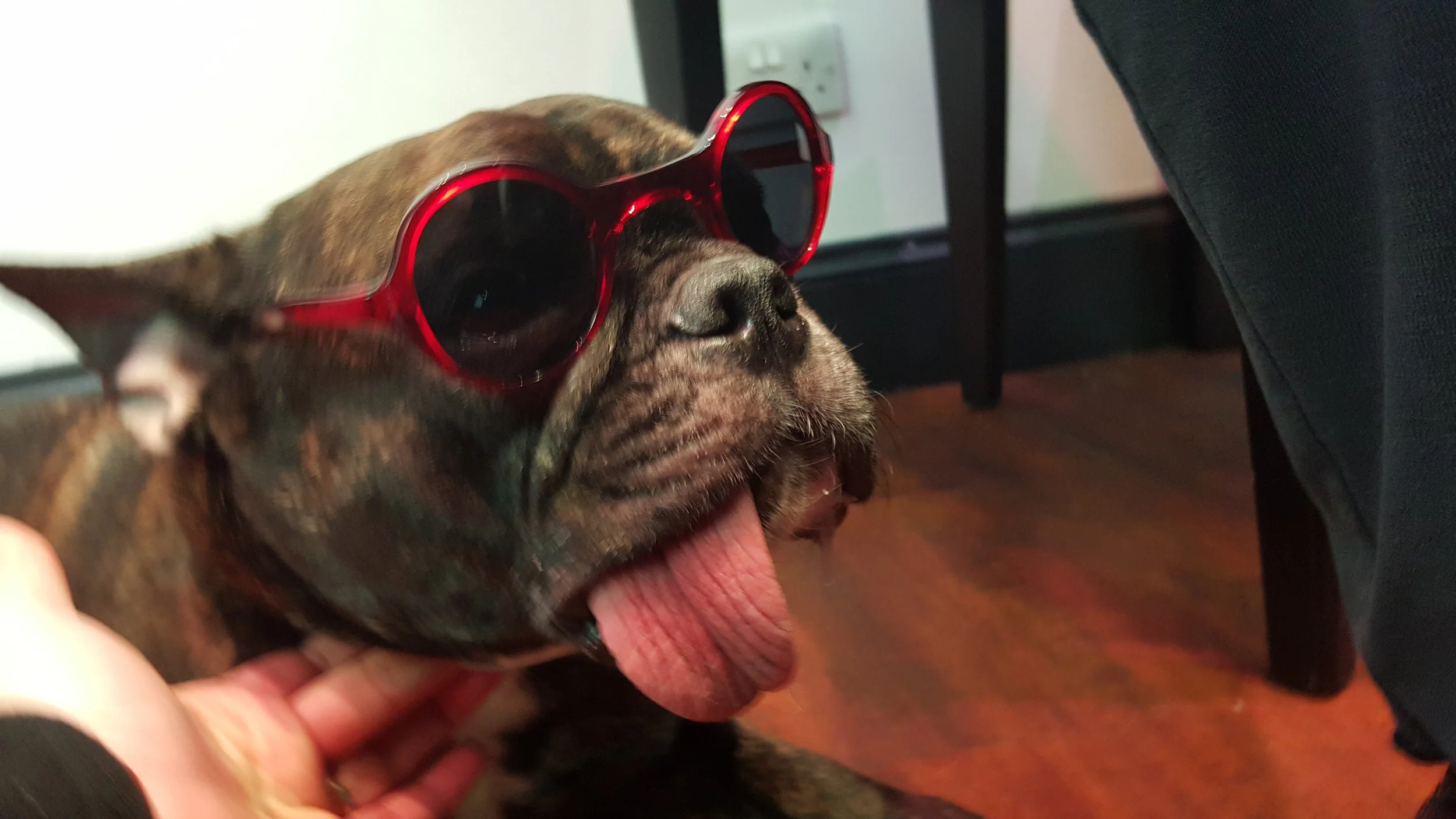
Carrie Fisher’s dog, Gary
If you weren’t designing glasses, what would you be doing instead?
Film director. I always planned to go into film and actually went to Hong Kong to get into the film industry when I was 22. I ended up getting my first job designing glasses instead – and my life took a different direction. Though I’ve ended up designing frames for many Hollywood films so found my way on to set eventually!
What keeps you excited about the business after so many years?
It's so immensely rewarding designing someone a pair of glasses – and seeing how it makes them look and feel. You can change their lives and sometimes save their eyesight. I frequently do the former and our advanced clinical eye tests have saved clients’ vision on a number of occasions. It’s the best job in the world.
Do you think fast-fashion eyewear is harming how people value design?
No, I think it makes it more accessible. If you look at eyewear from 40 years ago, you had about six styles to choose from in the UK. People hated their eyewear. These days there is a good chance they’ll love them. I always tell clients bespoke is important but not as important as shopping well. Take your time. Visit a few stores. Try on a lot of glasses. Build an eyewear wardrobe. Fast fashion allows you to do that with eyewear, but my advice is always to go for the highest quality frame you can afford. They will last a lot longer and often people buy cheap frames and put expensive lenses in. Then spend years looking wonky and generally disliking their purchase. Glasses are the first item people notice when they meet you – it’s well worth making them special.
Find Tom Davies at his store in Sloane Square, London.
