
Corsica, Sardinia, and the Sea Between
Close enough to share a ferry, distinct enough to visit both
By Isabella Califano
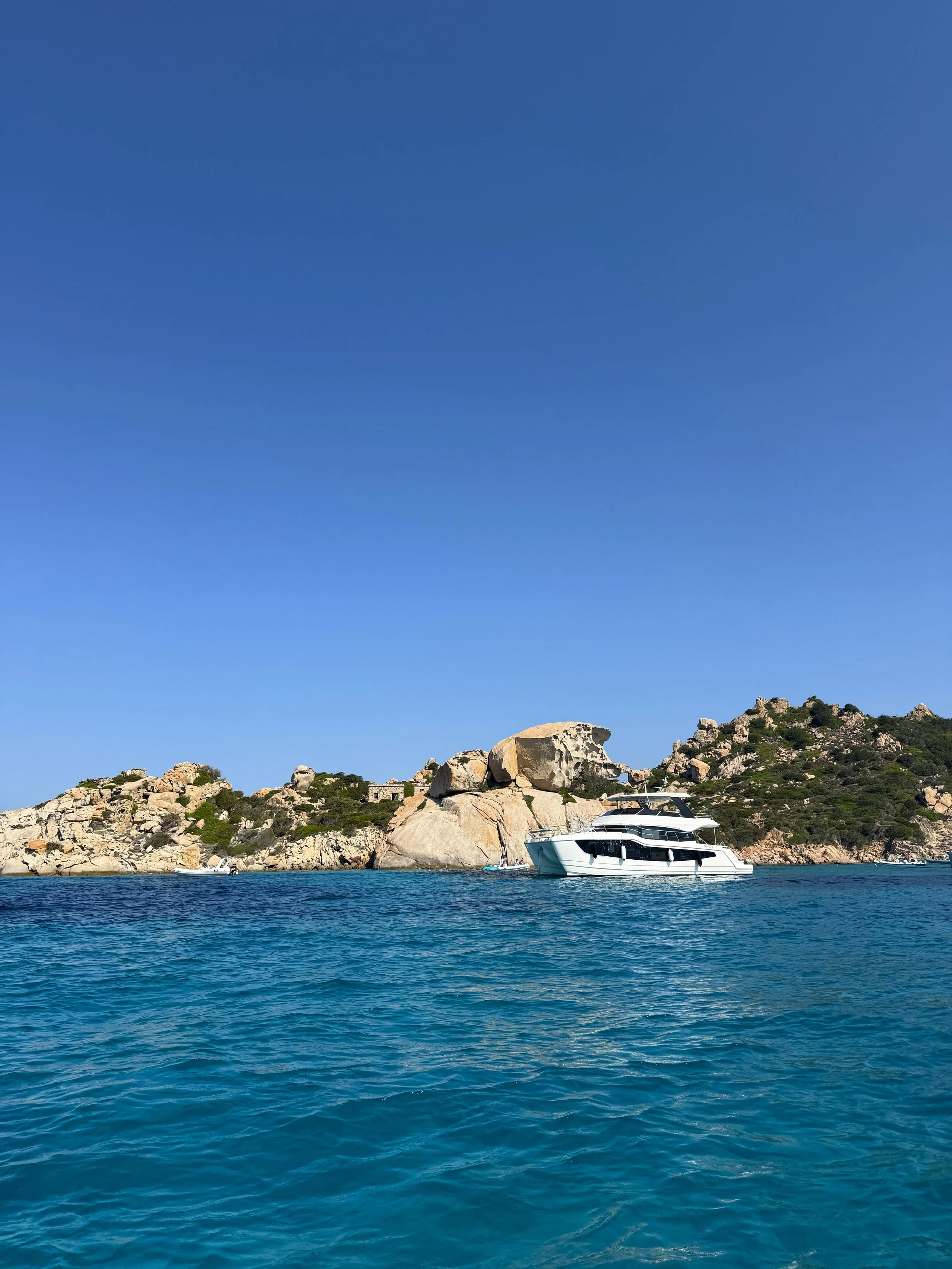
Sister Islands
Corsica and Sardinia are often thought of as separate destinations that require different itineraries. While each can certainly constitute a trip of its own, their proximity makes them easy to combine into one. Connected by an hour-long ferry ride, these geographic neighbours form a natural pairing.
The two islands are separated by only eleven miles of sea at their closest points, and that proximity is reflected in everything from food, like casu martzu, to dialects. The two, in fact, are referred to as sister islands, yet despite several similarities, each retains characteristics that are uniquely Corsican or Sardinian.
Living Up to a Name
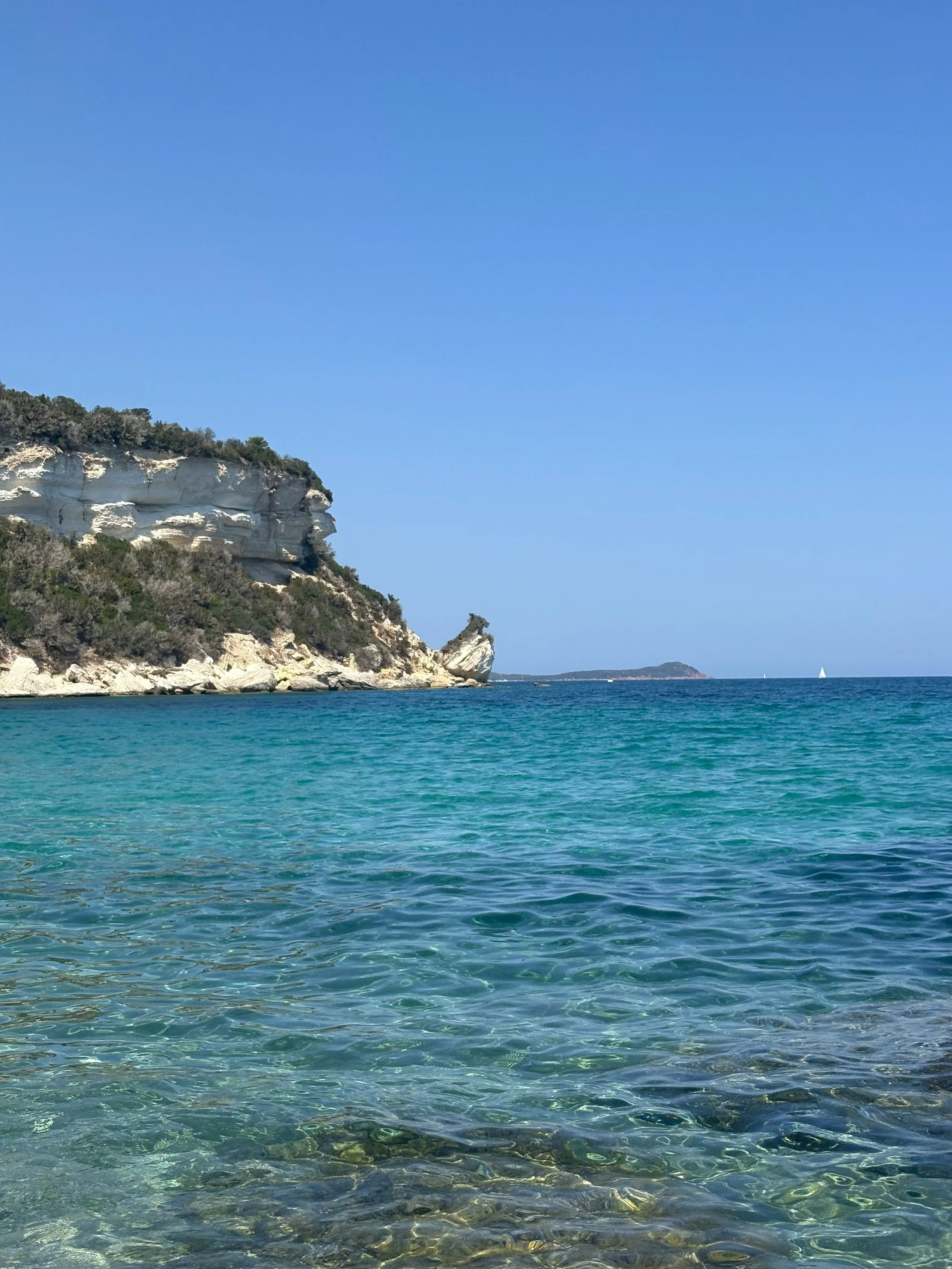
Corsica is known as L’Île de Beauté, or “the Isle of Beauty,” a nickname inspired by its varied landscapes, which shift within a few miles from sharp mountain peaks to whitewashed rock formations and secluded coves.
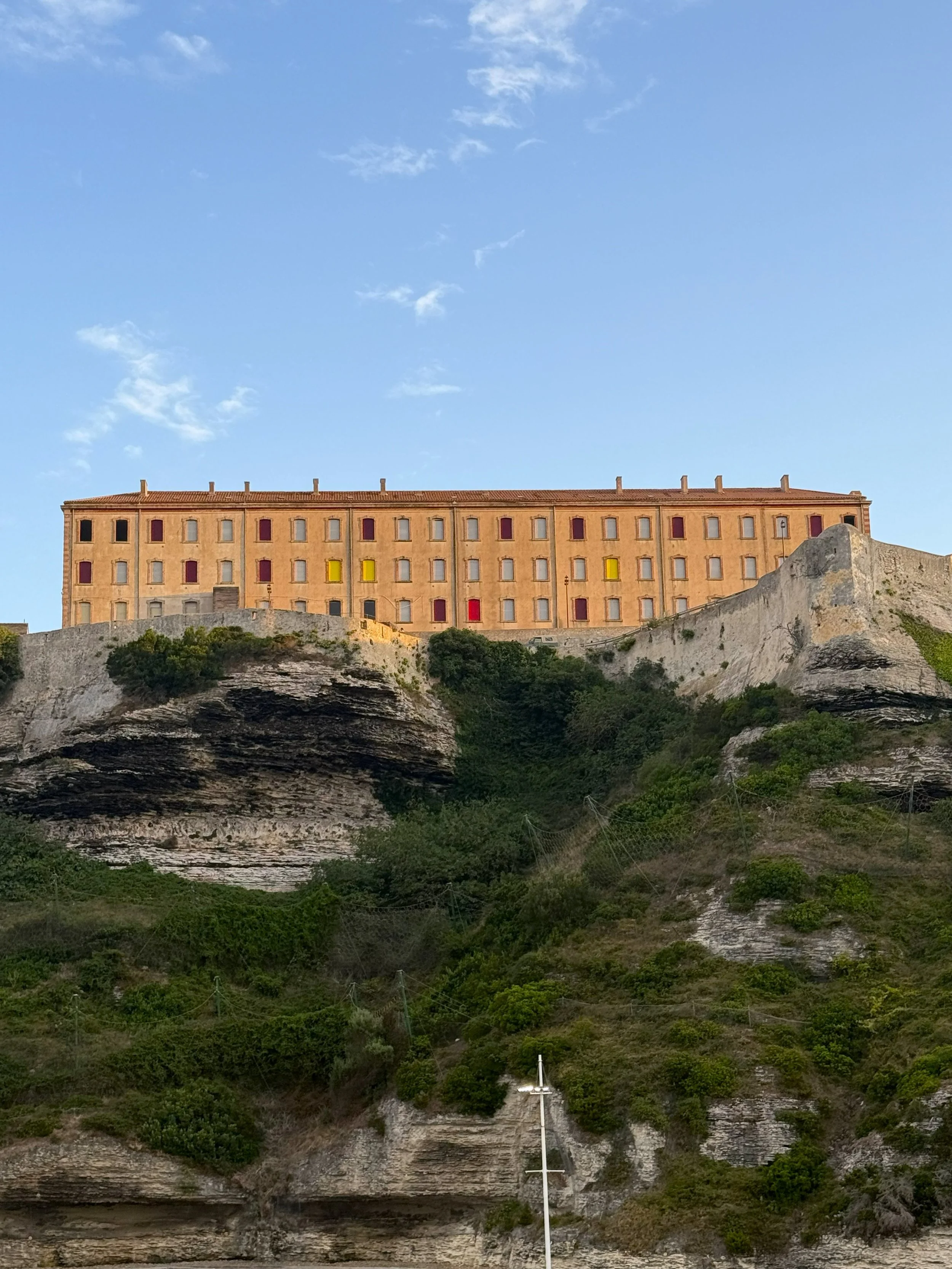
Despite its alluring nickname, Corsica remains a somewhat underrepresented summer getaway. Perhaps fittingly, its southern port of Bonifacio doesn’t make itself immediately known when arriving by sea. The city appears first in glimpses; as you round a jagged cliff, a large fortress comes into view. Atop it sits a faded salmon-coloured building, its rigid grid of red and yellow windows giving the cliffside an accidental Wes Anderson-like symmetry. There is also something about approaching Bonifacio from the water that makes its turbulent history feel present. As you sail beyond the cliffs, the sense of what might have happened here centuries ago seems to hang in the air.
Once on land, exploring Bonifacio requires a little improvisation. There are only six official taxi drivers, making getting around - especially during high season - a challenge. Rental cars can be scarce, so for those comfortable on two wheels, scooters are a practical alternative for zipping around.
A scooter makes getting to some of the city’s most popular beaches, such as Grand Sperone or Rondinara, and even some lesser-known shores, such as Plage de Canetto, easy. Navigating the winding mountain roads is manageable and, since parking is minimal (if not altogether non-existent), a scooter can get you closer to the beach than a car. Reaching them often requires continuing on foot, but even that journey can feel like the makings of a true European summer.
The journey on foot requires a short hike along rocky, dusty paths shaded by fig trees, their scent intensified by the summer heat. Eventually, the paths give way to Corsica’s famed aquamarine waters. Once there, little more is required than a swim and, under the warm afternoon sun, perhaps a midday siesta.
For those who prefer siestas away from the sand, A Chéda offers a calming retreat. Located just outside Bonifacio, the rustic property sits among dense gardens filled with olive trees and other native greenery. The stone-cottage rooms feel nostalgic, with décor that calls a ’90s European home to mind. Mornings begin with an ample breakfast spread of local cheeses, fruits, breads and buttery Corsican saucissons.
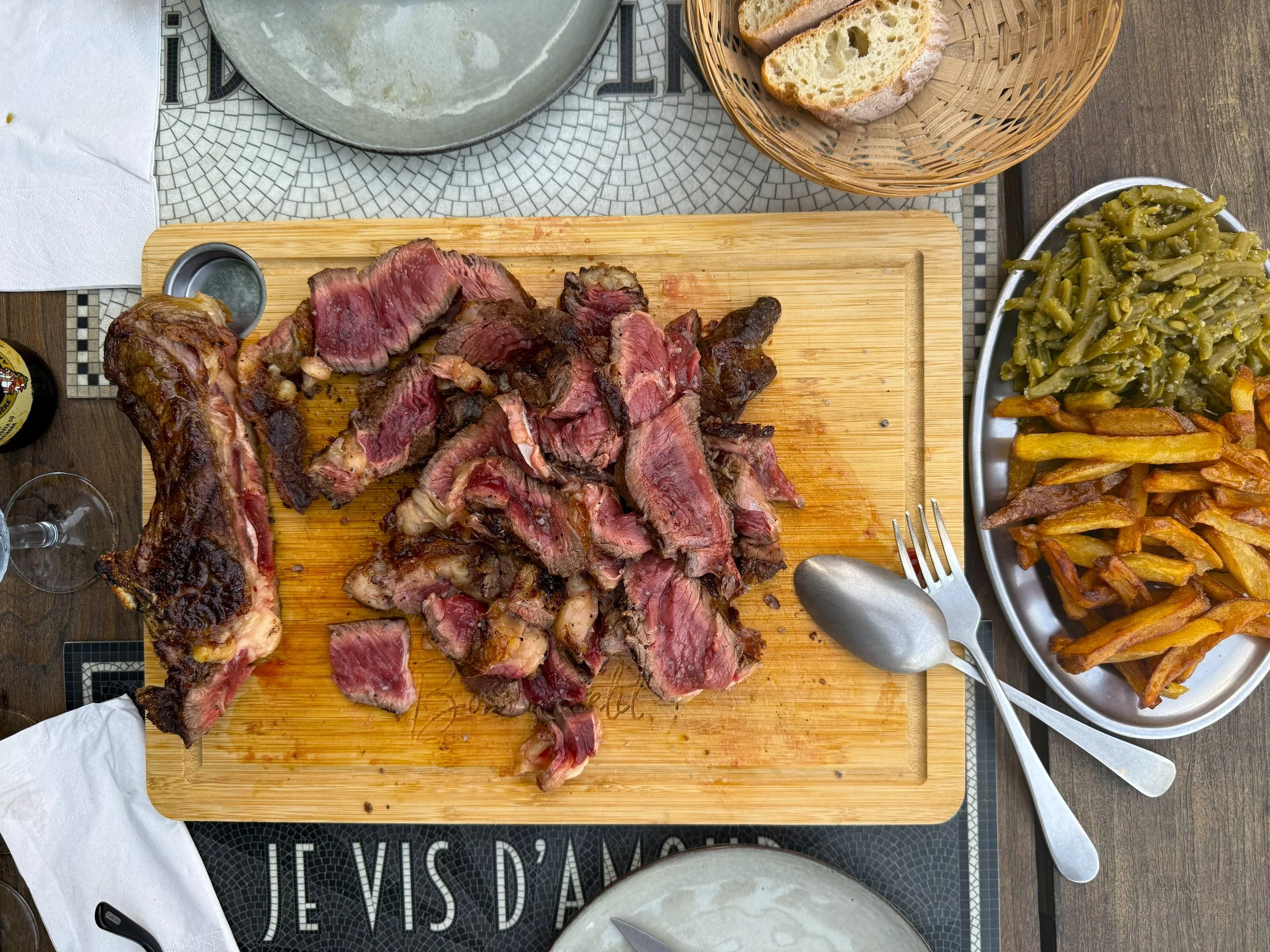
After a day spent along Bonifacio’s beaches, La Grillade offers a good change of pace. The restaurant itself is modest, set entirely outdoors and built around its grill and brick hearth. It’s no-frills, and the setup keeps the focus entirely on the food.
As its name suggests, La Grillade is a steak restaurant. Once ordered, the selected cut of steak is shown to you before it’s prepared. A waiter explains that it will be seasoned simply with myrtle-infused salt, made from one of the island’s most characteristic plants. There is no choice of temperature, either. The steak arrives medium-rare on a wooden cutting board, alongside green beans and potatoes, the bone left beside it and intended to be picked clean. To finish, you are offered a small glass of mirto, an aromatic, slightly bitter and fruity myrtle liqueur traditionally served as a digestif. The restaurant isn't shy about turning away walk-ins either, so reservations are recommended.
The Emerald Coast, and Beyond
Leaving Corsica is relatively simple. As Bonifacio shrinks into the horizon, Santa Teresa Gallura, Sardinia’s northern port, eventually comes into view, its small beach coves visible upon approach.
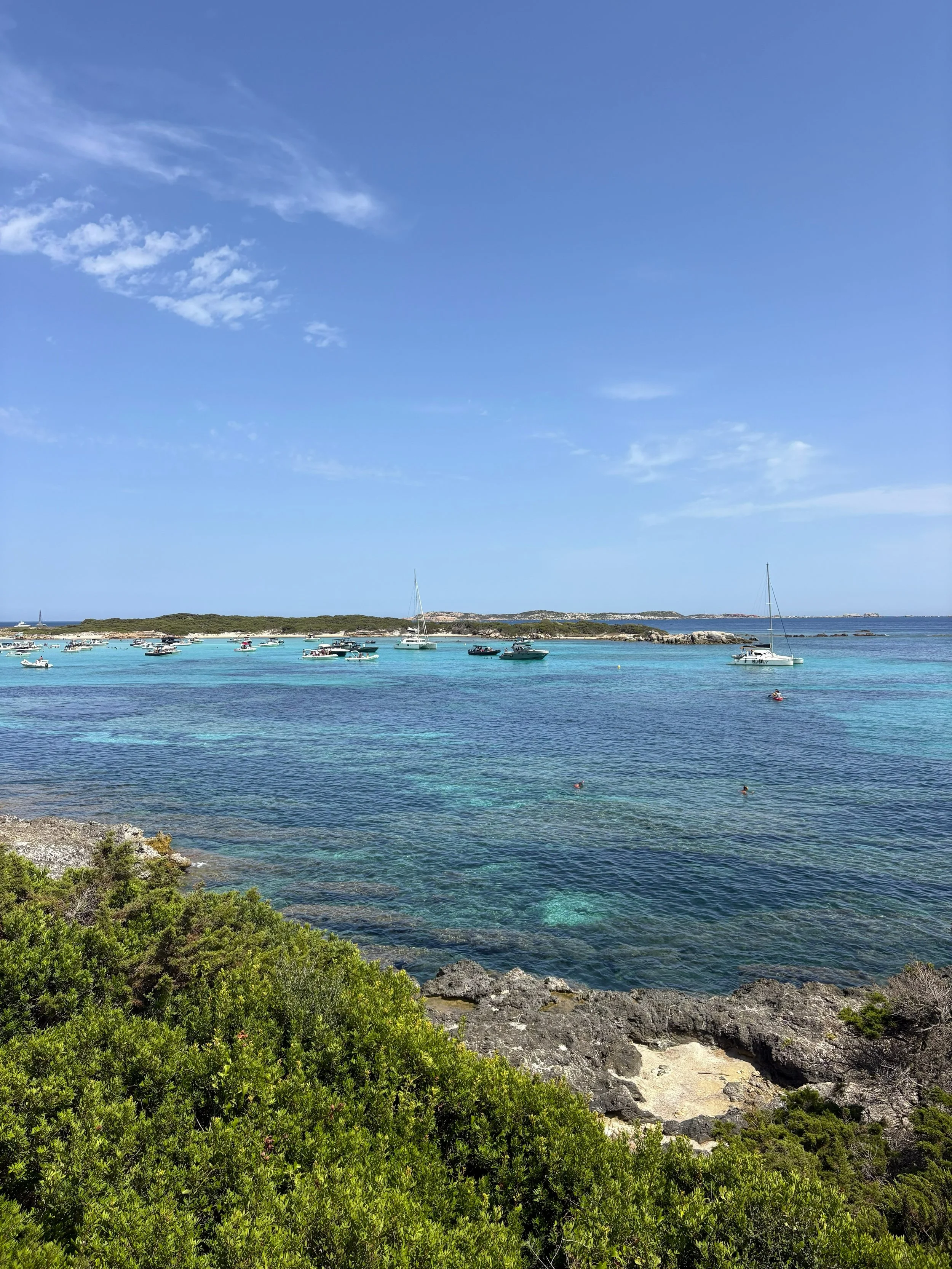
Sardinia’s most famous stretch of coastline is the Costa Smeralda, or Emerald Coast, so named for its sparkling emerald waters. But further north, around La Maddalena Archipelago, the waters span a different spectrum, ranging from deep sapphire to an almost electric blue.
A boat is arguably the best way to experience those waters. Small RIBs can be rented locally without a boating license, putting much of the archipelago within reach. On Ferragosto, Italy’s August 15th holiday and unofficial culmination of summer, boats of all sizes dot the water. Aboard a small RIB, the warm, clear water is yours to explore, with the afternoon spent slipping between shades of blue. On a day that Italians treat as practically sacrosanct, anchoring in a quiet cove with a packed lunch is about as pure an Italian summer as you’ll find.
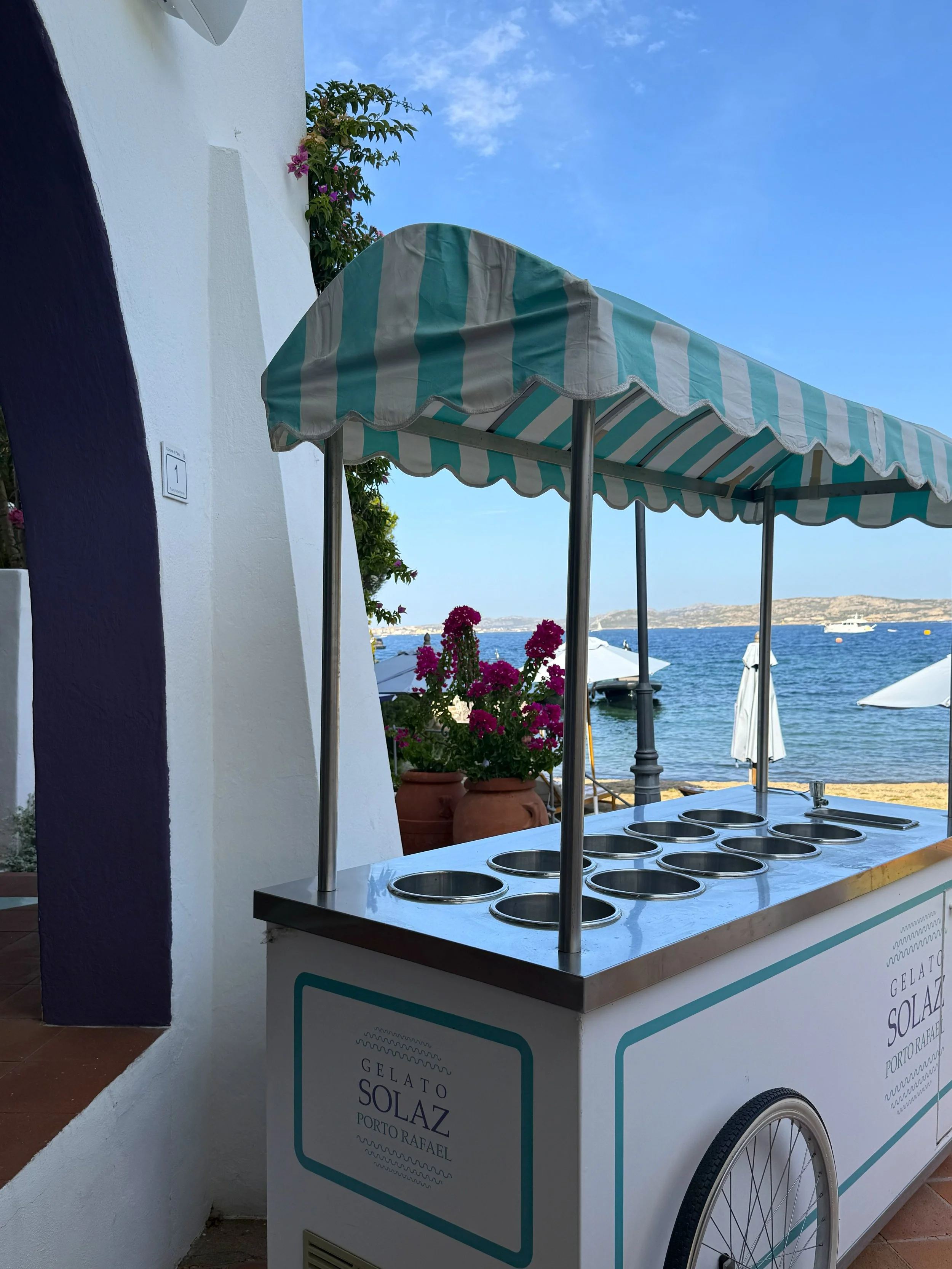
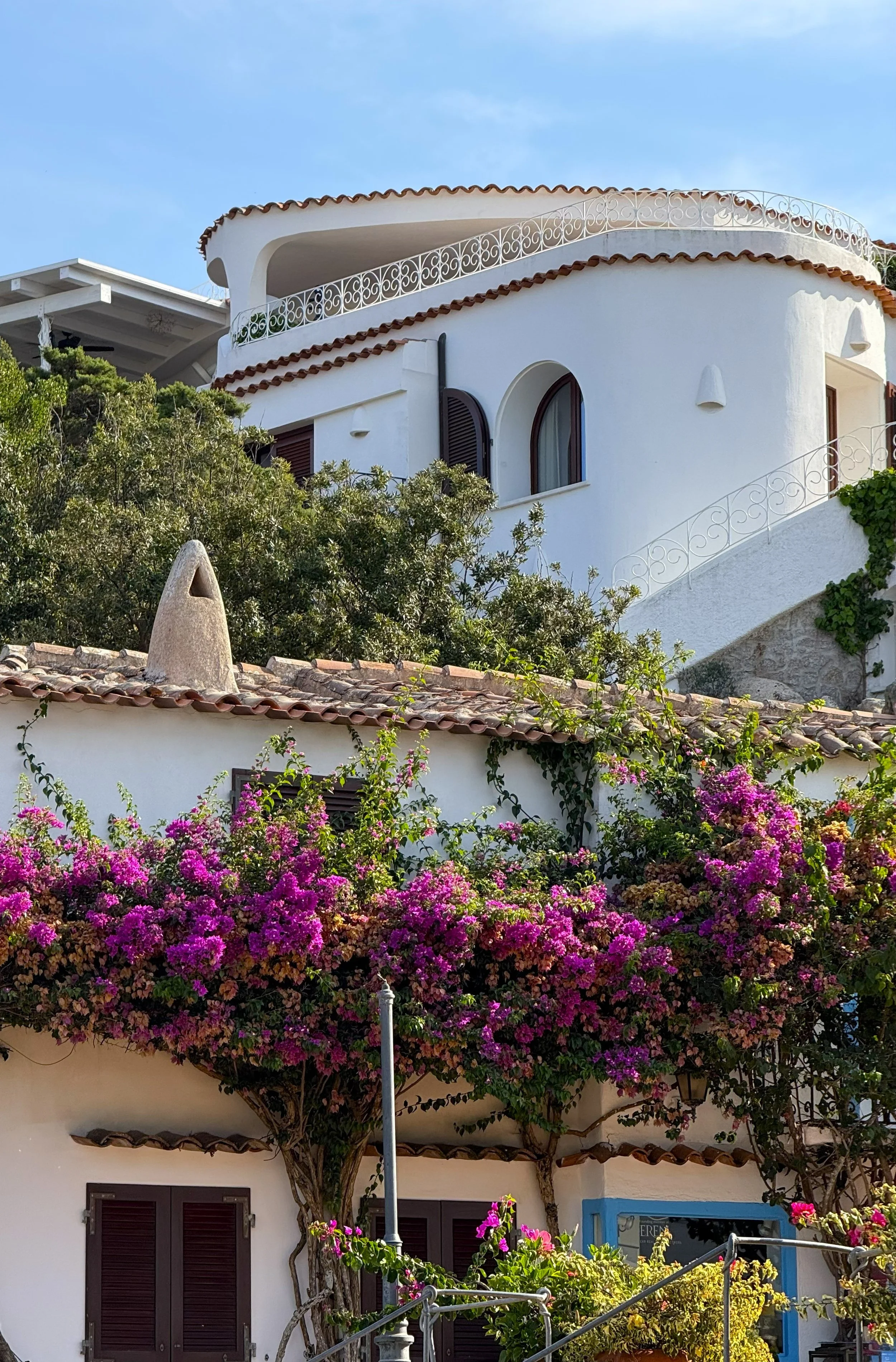
Like Corsica, Sardinia has pockets that feel unmistakably Sardinian, such as the Piazzetta in Porto Rafael. It’s a darling whitewashed enclave draped in purple bougainvillea and lined with small boutiques, conceived in the ‘50s by a Spanish count who fell in love with this corner of the island. La Coppa Blu, a small gelato cart in the square, works a treat; fior di latte, peppered with bits of tart raspberry, and nocciola are two standout flavours. On Ferragosto, the Piazzetta joins in the summer celebrations, playing host to an annual white party, with party-goers spilling into the square dressed accordingly.
August, however, comes with a trade-off. Soaring temperatures and peak-season crowds place visible strain on an otherwise laid-back destination, and interactions with overwhelmed staff can occasionally feel more brusque than welcoming.
Making the Crossing
The two islands certainly have a lot to offer, but the trick is not to attempt to cover both in full, especially on a shorter trip. For a five-night trip, a three-two night split strikes a good balance, with the extra night best spent on whichever island you are more keen to explore. With eleven miles between them, there’s little reason to choose just one.
Follow Isabella on Instagram: https://www.instagram.com/iscalifano/
